
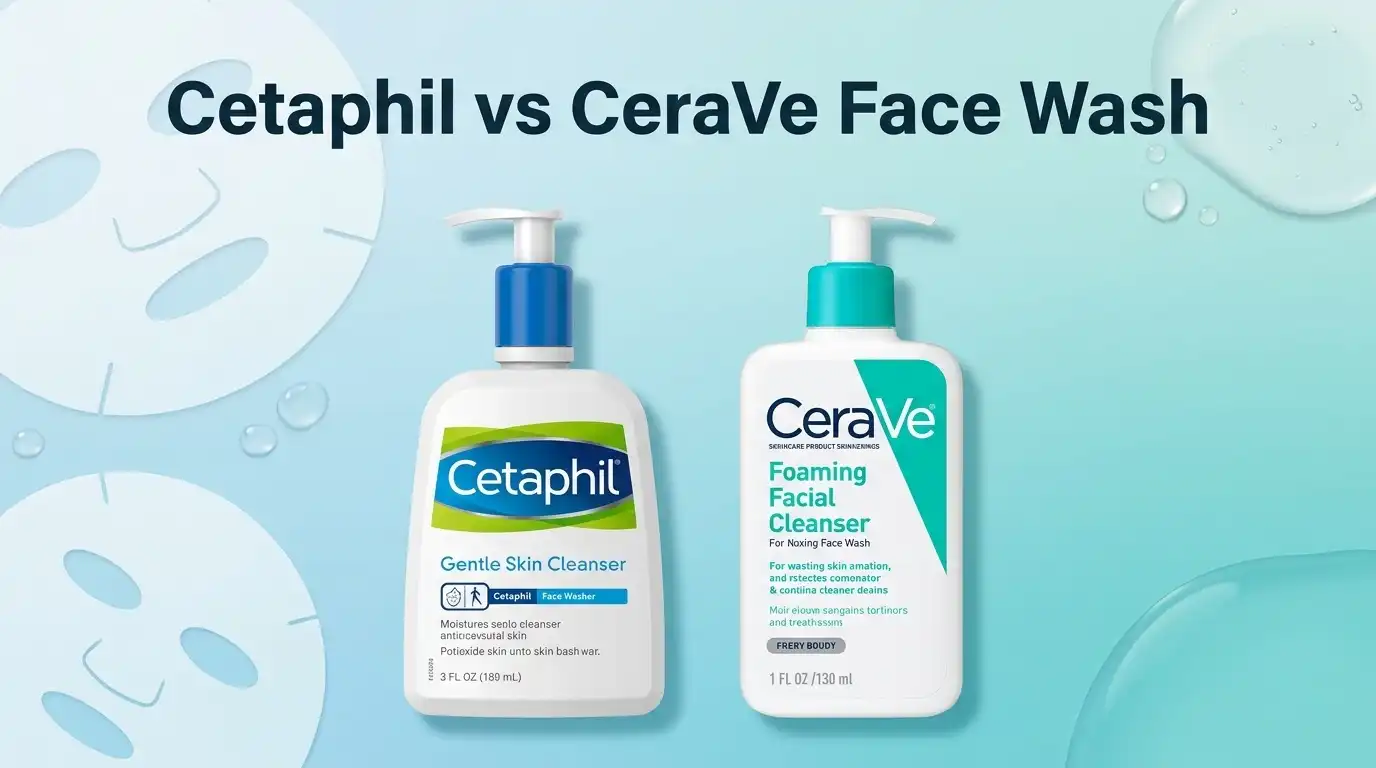
Two white bottles sit on almost every bathroom shelf in America. One says Cetaphil. The other says CeraVe. Both cost under twenty dollars. Both carry dermatologist recommendations. Both promise gentle cleansing without dryness.
Because they are not the same product. They clean skin in different ways, they feel different on wet hands, and they leave your face in a different state. One builds your skin barrier. The other calms your skin down. Picking the wrong one wastes money and irritates your face for weeks.
I bought both bottles, used them for months, and tracked how my skin behaved. This review covers texture, ingredients, packaging flaws, real cost per ounce, and the honest problems each bottle carries. You will also see which cleanser fits oily skin, which fits dry skin, and which one you should skip completely.
In a Nutshell:
- CeraVe wins on barrier repair. The Hydrating Facial Cleanser packs three ceramides plus hyaluronic acid. Those ingredients rebuild the skin barrier while you wash. People with eczema, rosacea, or a damaged barrier see the biggest gains here.
- Cetaphil wins on calming irritated skin. The Gentle Skin Cleanser leans on glycerin, panthenol, and niacinamide. It reduces redness fast and feels lighter on the skin. Sensitive faces having a flare up respond better to this one.
- Cetaphil gives more product for less money. The 20 ounce pump usually costs the same as CeraVe’s 16 ounce pump. That difference adds up across a year of daily washing.
- CeraVe leaves a slight film. Some users love that cushiony finish. Others hate it and feel unwashed. Test it before you commit to a big bottle.
- Neither one removes heavy makeup or sunscreen alone. Both need an oil cleanser or balm first. This is the most common complaint in real reviews.
- Oily skin should skip both hydrating versions and grab CeraVe Foaming or Cetaphil Daily Facial Cleanser instead.
Cetaphil Gentle Skin Cleanser Review

- CETAPHIL GENTLE SKIN CLEANSER: Clinically proven to cleanse while hydrating, providing 48 hours of hydration when wiped off versus rinsing
- IDEAL FOR DRY TO NORMAL, SENSITIVE SKIN: Hydrates and soothes as it cleanses, preserving skin's moisture barrier, even after repeat washes

Last update on 2026-06-01 / Affiliate links / Images from Amazon Product Advertising API Some of the links on this website are affiliate links, which means that at no additional cost to you, I earn a commission if you click through and make a purchase. I only recommend products and services that I believe will add value to my readers. Thank you for your support!
Cetaphil launched this formula in 1947. Pharmacists mixed it for patients with reactive skin, and the recipe barely changed since then. That history matters. A cleanser surviving eight decades without a reformulation crisis says something real about the base.
The liquid pours out milky white and slightly thick. It does not foam. You spread it across dry or damp skin, work it for thirty seconds, then rinse or wipe it off with a soft cloth. That flexibility helps people with very reactive skin who cannot tolerate water rinsing during a flare up.
My skin felt calm within a week. Redness across my cheeks dropped noticeably. The niacinamide and panthenol combination does real work on inflammation, and the glycerin holds water in the top layer of skin. My pores looked slightly tighter after a month, which matches what dermatologists report about niacinamide.
The cleansing power sits on the low end. That is intentional. This bottle handles sweat, dust, and light grime. It struggles with sunscreen, foundation, and a full day of city pollution. I always needed a second cleanse.
The 20 ounce pump lasts roughly four months with twice daily use. The pump itself works smoothly and does not clog.
Pros
- Extremely gentle formula with a long safety record for reactive skin
- Calms redness and visible irritation within days
- Works without water, which helps during eczema flare ups
- Best value per ounce in the drugstore cleanser category
- Contains niacinamide and panthenol for soothing support
- Suitable for face and body
Cons
- Weak cleansing power, so makeup stays behind
- Contains masking fragrance despite marketing as fragrance free
- Leaves a slippery residue some people dislike
- No ceramides in the base formula
- Non foaming texture feels strange to lather lovers
CeraVe Hydrating Facial Cleanser Review

- [ HYDRATING FACE WASH ] Daily face wash with hyaluronic acid, ceramides, and glycerin to help hydrate skin without stripping moisture. Removes face makeup, dirt, and excess oil, provides 24-hour hydration and leaves a moisturized, non-greasy feel.
- [ ECZEMA FACE WASH ] Non-foaming cleanser for dry skin with a lotion-like consistency feels smooth as it cleanses, even on sensitive, dry skin. Fragrance-free, paraben-free, non-comedogenic and non-drying. Certified by the National Eczema Association
Last update on 2026-05-29 / Affiliate links / Images from Amazon Product Advertising API Some of the links on this website are affiliate links, which means that at no additional cost to you, I earn a commission if you click through and make a purchase. I only recommend products and services that I believe will add value to my readers. Thank you for your support!
CeraVe arrived in 2005 with one clear idea. Put ceramides back into the skin during every step of the routine. Dermatologists supported that approach immediately, and this cleanser became the default recommendation in clinics across the country.
The formula holds ceramides 1, 3, and 6 II plus hyaluronic acid and cholesterol. Those lipids match what sits naturally between your skin cells. Washing with them means you replace what the surfactants remove instead of running a deficit.
The texture reads as a light lotion. It stays creamy in your palms and never bubbles. On skin, it glides easily and rinses in about fifteen seconds of running water. My face felt plump rather than tight after rinsing, and that plumpness lasted well past the point where other cleansers left me reaching for moisturizer.
Winter is where this bottle proves itself. My skin stopped flaking around my nose and mouth after two weeks of use. The barrier support is not marketing language. It is measurable in how your skin behaves at low humidity.
The downside shows up on oily days. The formula can feel heavy and slightly occlusive. During humid summer weeks my forehead broke out until I switched to the foaming version. The 16 ounce pump costs a couple of dollars more than Cetaphil’s larger bottle.
Pros
- Three essential ceramides rebuild the skin barrier during cleansing
- Hyaluronic acid holds moisture in the skin
- Genuinely fragrance free with no masking scent
- National Eczema Association accepted
- Excellent for winter dryness and flaking
- Non comedogenic and suitable for eye area use
Cons
- Leaves a noticeable film that oily skin types dislike
- Can trigger congestion on acne prone skin
- Poor makeup removal on its own
- Smaller bottle for a higher price
- Pump sometimes dispenses too much product at once
Top 3 Alternative for CeraVe Hydrating Facial Cleanser

- Toleriane Hydrating Gentle Cleanser is a clinically proven daily face wash for normal to dry, sensitive skin that hydrates and restores the skin barrier while gently cleansing
- Formulated with La Roche-Posay prebiotic thermal spring water, niacinamide, and ceramide-3, this face wash gently cleanses skin of dirt, makeup, and impurities while maintaining skin's natural moisture barrier and pH
Last update on 2026-09-08 / Affiliate links / Images from Amazon Product Advertising API Some of the links on this website are affiliate links, which means that at no additional cost to you, I earn a commission if you click through and make a purchase. I only recommend products and services that I believe will add value to my readers. Thank you for your support!
La Roche Posay Toleriane Hydrating Gentle Facial Cleanser

- Our mildest cleanser specifically formulated for daily facial use.
- Helps remove makeup and excess skin oils without drying your skin.
Last update on 2026-05-29 / Affiliate links / Images from Amazon Product Advertising API Some of the links on this website are affiliate links, which means that at no additional cost to you, I earn a commission if you click through and make a purchase. I only recommend products and services that I believe will add value to my readers. Thank you for your support!
Vanicream Gentle Facial Cleanser

- 12-fluid ounce bottle of Neutrogena Ultra Gentle Hydrating Facial Cleanser for sensitive skin effectively cleanses face while leaving skin feeling moisturized and naturally soft all day
- Our extraordinarily mild non-foaming cleanser washes away excess oil, dirt, bacteria and makeup and cleanses even the most dry and sensitive skin, including skin with acne, eczema or rosacea
Last update on 2026-09-08 / Affiliate links / Images from Amazon Product Advertising API Some of the links on this website are affiliate links, which means that at no additional cost to you, I earn a commission if you click through and make a purchase. I only recommend products and services that I believe will add value to my readers. Thank you for your support!
Neutrogena Ultra Gentle Hydrating Facial Cleanser
Unboxing and First Impressions
Both bottles arrive in plain cardboard with no ceremony. Cetaphil ships in a slim box with the pump collar taped down. CeraVe ships with a plastic sleeve over the nozzle. Neither brand wastes money on presentation, and honestly that feels right for a fifteen dollar cleanser.
Cetaphil’s bottle is taller and narrower. The plastic feels thinner than CeraVe’s and flexes when you squeeze it. The label uses that familiar blue and white print with a peach accent. Priming the pump takes three or four presses. After that it delivers a consistent amount every time.
CeraVe’s bottle sits shorter and wider with a heavier wall. The pump has a locking twist collar that stops leaks during travel. That collar is a genuinely useful detail that Cetaphil skipped. The white and blue label looks clinical, almost pharmaceutical.
First squeeze from Cetaphil produced a thin milky liquid that ran across my palm. First squeeze from CeraVe produced a thicker white cream that held its shape. The difference is obvious the second you see them side by side.
Neither has any smell worth mentioning. Cetaphil carries the faintest sweet note from its masking fragrance. CeraVe smells like nothing at all. If you have fragrance sensitivity, that blank smell from CeraVe is the safer bet.
Ingredient Breakdown: What Sits Inside Each Bottle
Ingredients decide everything here, so let us look at the actual lists.
Cetaphil Gentle Skin Cleanser starts with water and glycerin. Then come mild cleansing agents, panthenol, niacinamide, and pantolactone. The surfactants are cocamidopropyl betaine and disodium laureth sulfosuccinate. Both rank as mild and both foam poorly by design. Glycerin sitting in the second position means high concentration. That is the main reason this cleanser feels moisturizing.
CeraVe Hydrating Facial Cleanser also opens with water and glycerin. Then it adds ceramide NP, ceramide AP, ceramide EOP, phytosphingosine, cholesterol, and sodium hyaluronate. It uses MVE technology, a layered delivery system that releases lipids slowly over hours instead of all at once.
The gap is clear. Cetaphil soothes. CeraVe rebuilds. Niacinamide and panthenol reduce inflammation and support hydration, but they do not replace missing lipids. Ceramides do exactly that job.
One more difference matters. Cetaphil includes masking fragrance on the label. CeraVe does not. Anyone with confirmed fragrance allergy should choose CeraVe on that basis alone.
Neither formula contains sulfates like SLS in the current version, despite old internet claims. Neither contains alcohol, essential oils, or drying astringents. Both are non comedogenic on paper, though real world results vary by person.
Texture, Lather, and Rinse Feel
This is where personal preference beats science.
Cetaphil feels like watered down lotion. It spreads thin across the face and needs almost no effort to distribute. No bubbles form at all. Rinsing takes about ten seconds and the water runs slightly cloudy. My skin felt soft and a little slick afterward, similar to the feeling after a light moisturizer.
CeraVe feels denser and richer in the palm. It takes more massaging to spread across a whole face, and it clings to skin more stubbornly. Rinsing takes longer, maybe twenty seconds of running water, and even then a faint coating stays behind. That coating is the ceramide layer doing its job, but it reads as “not fully clean” to some people.
I tested both on a hot August morning after a workout. Cetaphil left me feeling refreshed. CeraVe left me feeling slightly coated and reaching for a toner. In January the results flipped completely. CeraVe felt protective. Cetaphil felt insufficient.
The honest takeaway: your climate matters more than the brand. Humid summers favor Cetaphil’s lighter finish. Dry winters favor CeraVe’s richer one. Many people rotate bottles by season, and that approach works better than loyalty to one label.
Which One Suits Oily and Acne Prone Skin
Neither hydrating version is your answer.
Oily skin needs surfactants strong enough to clear sebum from pore openings. Both cream cleansers deliberately avoid that strength. Using them on very oily skin often leads to congestion, blackheads, and a greasy feeling by midday. I learned this the hard way with CeraVe Hydrating during a humid stretch.
The correct picks change. CeraVe Foaming Facial Cleanser delivers the same three ceramides plus niacinamide in a gel that actually foams and clears oil. It rinses completely clean with no film. Most dermatologists point acne prone patients here first.
Cetaphil Daily Facial Cleanser is the other strong option. It foams lightly, contains niacinamide and panthenol, and costs slightly less. It cleans well without stripping, though it does not include ceramides.
If you use benzoyl peroxide, adapalene, or tretinoin, a foaming cleanser prevents the product buildup that cream cleansers can trap. That matters for treatment results.
One warning. Foaming does not mean harsh, and harsh does not mean effective. Skip anything with drying alcohol, menthol, or high pH soap bases. Those strip your barrier and trigger more oil production within days. The goal stays the same: clean skin that does not feel tight.
Which One Suits Dry and Sensitive Skin
Dry skin gets a clearer answer. CeraVe Hydrating Facial Cleanser wins for most people with dry skin.
The reason sits in basic skin biology. Dry skin lacks lipids in the outer layer, which lets water escape. Ceramides make up roughly half of those missing lipids. Washing with a ceramide cleanser replaces some of that loss during every single wash. Over weeks, the barrier measurably improves.
Sensitive skin splits the decision. If your sensitivity comes from a broken barrier, meaning stinging, flaking, and tightness, CeraVe helps more. If your sensitivity shows up as redness, heat, and reactivity, Cetaphil calms it faster thanks to panthenol and niacinamide.
People with rosacea often prefer Cetaphil. The lighter texture causes less flushing, and the option to wipe it off without water helps during bad weeks.
People with eczema usually prefer CeraVe. The National Eczema Association accepted seal on that bottle is not decoration. Lipid replacement is the accepted approach for eczema prone skin.
One practical tip for both. Use lukewarm water only. Hot water strips lipids faster than any cleanser can replace them. Pat your face dry with a soft towel and apply moisturizer within sixty seconds while skin still holds surface water.
Price and Value Per Ounce
Numbers make this section short and useful.
Cetaphil Gentle Skin Cleanser typically sells around fifteen to seventeen dollars for the 20 ounce pump. That works out to roughly eighty cents per ounce. The 16 ounce version drops the price further, and warehouse club multipacks push the cost lower still.
CeraVe Hydrating Facial Cleanser typically sells around fifteen to eighteen dollars for the 16 ounce pump. That lands near one dollar per ounce. CeraVe costs roughly twenty percent more per ounce.
Both brands run frequent promotions. Amazon subscribe and save discounts often cut five to fifteen percent. Target and Walmart both stock 20 ounce sizes at competitive prices.
Is the CeraVe premium worth paying? For dry or eczema prone skin, yes. Ceramides cost more to formulate, and you get a real functional benefit. For normal skin with no barrier issues, the extra money buys little you will notice.
One cost trap deserves attention. Refill pouches now exist for CeraVe and cut the per ounce price meaningfully. They also reduce plastic waste. Cetaphil offers large bonus size bottles that serve the same purpose.
Compared with prestige cleansers running thirty to sixty dollars for six ounces, both bottles remain excellent value. Neither will make you feel guilty about washing your body with leftover product.
Packaging Problems Nobody Mentions
Marketing photos hide real annoyances, so here they are.
CeraVe’s pump over dispenses. One full press releases far more cream than a face needs. I waste product on every wash unless I press halfway, which then sometimes fails to dispense at all. The locking collar helps for travel but adds a step in a wet shower.
Cetaphil’s bottle walls flex too much. Grabbing it with wet hands causes squeezing, and the pump then spits liquid unpredictably. The thin plastic also makes the bottle tip over easily once it drops below half full.
Both pumps fail to reach the last ounce or two of product. You end up unscrewing the top and pouring the remainder into your palm. That is a small waste multiplied across every bottle you buy.
The flip cap versions of both cleansers avoid pump problems but create new ones. Cream cleanser dries around the cap opening and forms a crust. Clean that edge weekly or the cap stops closing properly.
Neither bottle has volume markings, so you cannot tell how much product remains until it starts sputtering. A minor complaint, but a real one when you plan reorders.
What Each Face Wash Does Not Do Well
Honest reviews name the failures, so let us name them.
Cetaphil Gentle Skin Cleanser does not clean thoroughly. If you wear sunscreen daily, this cleanser will not remove all of it. Residue builds over days and causes dullness and congestion. It also does nothing for texture, dark spots, or active acne. The masking fragrance disqualifies it for people with confirmed fragrance allergies, despite the gentle branding.
CeraVe Hydrating Facial Cleanser does not suit oily skin. The film it leaves clogs pores on sebum heavy faces. It also fails at makeup removal, and the thick texture makes it awkward to use in the shower. Some people report stinging around the eyes despite the ophthalmologist tested claim.
Both share a bigger limitation. Neither cleanser treats any skin condition. They clean and support. That is all. Expecting either bottle to clear acne, fade hyperpigmentation, or reverse aging leads to disappointment. Those jobs belong to actives like retinoids, acids, and vitamin C.
Both also lack antioxidant content of any meaningful level. Cleansers wash off, so that is defensible, but it means neither product replaces a serum.
Neither works as a single step routine. You still need moisturizer and sunscreen. Buying a good cleanser and skipping those two steps produces worse results than the reverse.
Final Verdict: Cetaphil or CeraVe
Here is the decision in plain terms.
Choose CeraVe Hydrating Facial Cleanser if your skin runs dry, flaky, or eczema prone, if you live somewhere cold, if you use retinoids, or if you need barrier repair. The ceramide content delivers a real benefit nothing in the Cetaphil bottle matches.
Choose Cetaphil Gentle Skin Cleanser if your skin runs reactive and red, if you want maximum product for minimum money, if you prefer a lighter finish, or if you need a cleanser that works without water during flare ups.
Choose CeraVe Foaming or Cetaphil Daily Facial Cleanser if your skin runs oily or breaks out. Both hydrating creams are the wrong tool for that job.
My personal setup uses both. CeraVe Hydrating in the morning from October through March. Cetaphil Gentle whenever my skin gets angry. CeraVe Foaming through the summer months. That rotation costs less than one prestige cleanser per year.
The real answer: both bottles are good, and the loser is whoever overthinks this choice for three weeks. Pick the one matching your skin type today, use it consistently for six weeks, and judge the results yourself. Skin responds to consistency more than to brand names.
Neither purchase will be a mistake you regret.
FAQs
Is CeraVe better than Cetaphil for acne?
CeraVe Foaming Facial Cleanser beats both hydrating creams for acne. It contains niacinamide, clears excess oil, and rinses without residue. The hydrating versions from either brand can trap oil and worsen congestion on acne prone skin.
Can I use Cetaphil and CeraVe together?
Yes. Many people use one in the morning and the other at night, or rotate by season. The formulas do not conflict. Just avoid using two cleansers in a single wash, which over cleans your skin.
Does either cleanser remove sunscreen?
Neither removes sunscreen completely on its own. Use an oil cleanser, cleansing balm, or micellar water first, then follow with Cetaphil or CeraVe. That double cleanse prevents the buildup that causes dullness and clogged pores.
Which one is truly fragrance free?
CeraVe. Its label lists no fragrance of any kind. Cetaphil Gentle Skin Cleanser includes masking fragrance, which is a blend used to neutralize raw ingredient smells. Anyone with fragrance allergy should pick CeraVe.
Are these cleansers safe during pregnancy?
Both use ingredients generally considered safe during pregnancy, including glycerin, ceramides, hyaluronic acid, niacinamide, and panthenol. Neither contains retinoids or salicylic acid. Confirm with your own doctor, since individual situations vary.
How long before I see results?
Give either cleanser four to six weeks. Barrier repair from ceramides shows measurable improvement around week three. Redness reduction from Cetaphil often appears within seven to ten days. Skip judging results in the first few days.
